

Dog & Cat Teeth Cleaning in Covina, CA

A dental cleaning is one of the most common procedures we do—and one of the most carefully planned. 

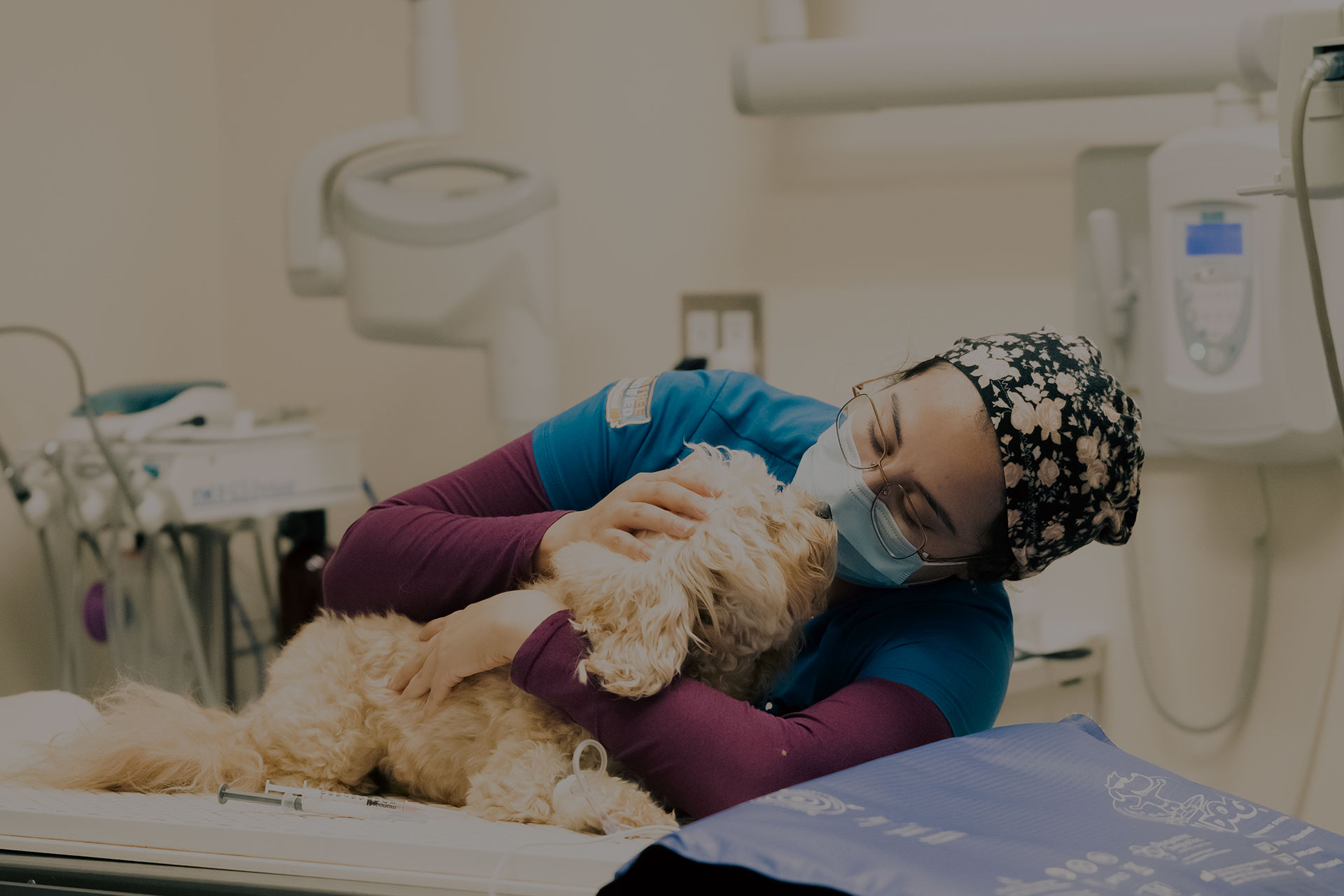
Every dental cleaning starts with an exam. Our team checks your pet's mouth, walks you through what they need, and schedules a date for their cleaning.

Request Appointment Book Your Pet's Exam Online Call Us

Do Dogs and Cats Really Need Dental Cleanings? Yes, dogs and cats need professional dental cleanings to remove the plaque and tartar that build up under the gumline. Think about what dentists recommend for your own teeth: brushing twice a day, a cleaning every six months, x-rays once a year. Pets have the same dental issues we do. They just don't get daily brushing or routine cleanings, so disease builds up faster.  

Without routine cleanings, the bacteria living in your dog or cat’s mouth can travel through the bloodstream and can affect your pet's heart, kidneys, and liver.  

By age three, more than 80% of dogs and 70% of cats already have some form of dental disease. The early signs are subtle, and by the time the smell or pain is obvious, the disease has been there for a while. A professional veterinary dental cleaning is the only way to remove what's accumulated under the gumline, examine the teeth properly, and X-ray each tooth’s roots to see what's happening below the surface.
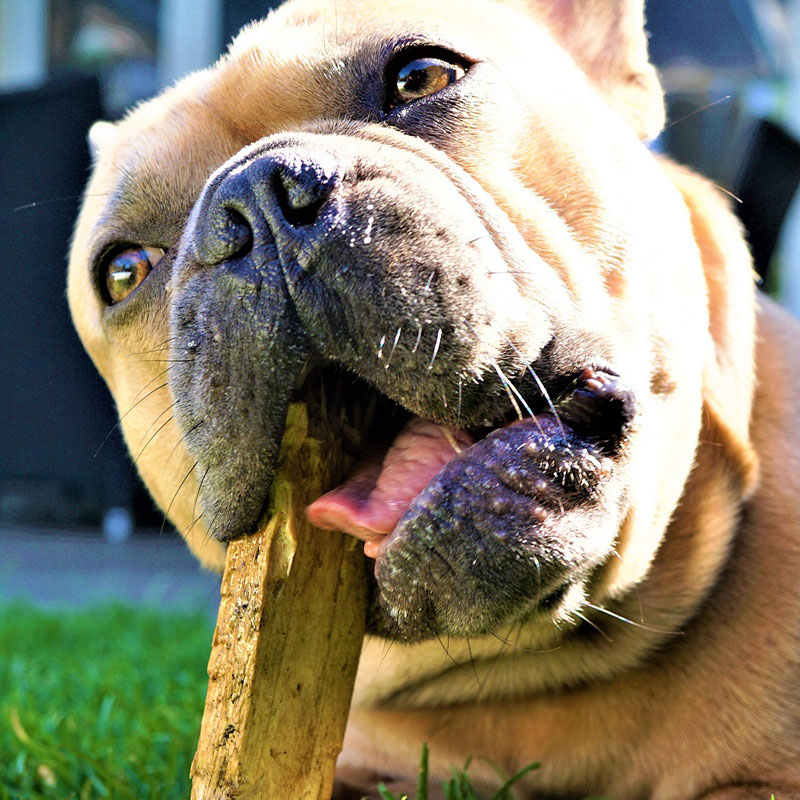
Signs Your Pet May Need a Dental Cleaning

Dog breath is something pet owners either love or hate. But the moment your pet’s breath starts to smell from across the room, it’s not just normal bad breath anymore; it’s bacteria. Bad breath in dogs and cats is one of the most common signs of dental disease, and one of the top reasons to talk to your veterinarian about a cleaning.

If you’re noticing any of the following, it’s worth scheduling a wellness exam:

  • Bad breath that’s persistent or noticeably worse
  • Visible yellow or brown buildup on the teeth
  • Red, swollen, or bleeding gums
  • Discolored, broken, or loose teeth
  • Drooling more than usual
  • Pawing at the face or rubbing the mouth
  • Chewing on one side, dropping food, or eating more slowly
  • Weight loss or low appetite without another obvious cause
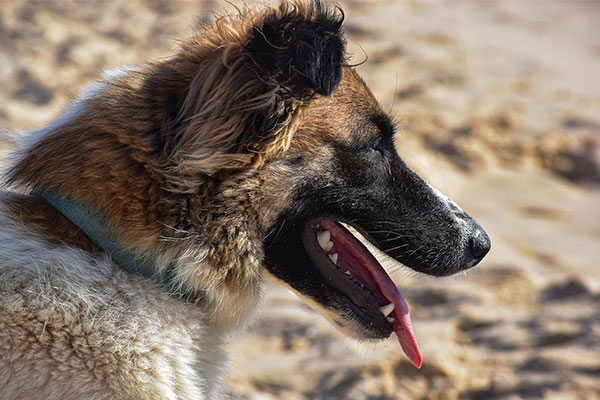
Pets are good at hiding pain, and dental disease is the kind they hide best. The number-one reason pet owners put off dental cleanings is the fear of anesthesia. We completely understand, and that’s why anesthesia is the part of a dental cleaning that we plan for the most. But the bigger risk for your pet is the one that doesn’t get talked about: the slow effects of untreated dental disease.

Veterinary and human research have both linked chronic dental disease to heart valve infections, kidney damage, and liver inflammation. There’s also chronic pain your pet won’t show, bone loss in the jaw that can lead to fractures, and abscesses that can turn septic. Untreated dental disease can be a silent killer. A planned dental, done safely, isn’t.

What’s Included in a Dental Cleaning at Covina

We take dental day incredibly seriously. There are parts of a safe dental cleaning we don’t compromise on—regardless of size, species, or age—and they’re all included in our bundle:

  • IV catheter placement and IV fluids during the procedure
  • Anesthesia and full-procedure monitoring
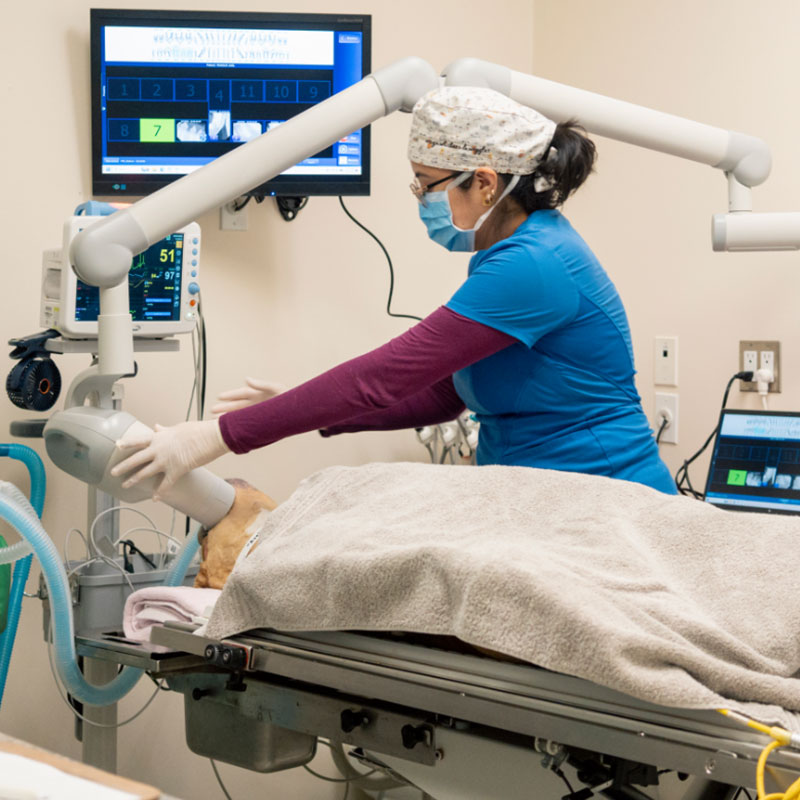
  • Full-mouth digital dental X-rays
  • Dental charting and probing for gingivitis, pocketing, mobility, and fractures
  • Ultrasonic scaling and polishing
  • Fluoride treatment
  • Post-operative monitoring through recovery
  • Take-home instructions

What we tailor to your pet (the specific medications, the pre-surgical anti-anxiety and anti-nausea meds we send home, the level of monitoring) depends on their age, health, and what the pre-op exam and bloodwork tell us.

Cleanings are performed by Covina’s veterinarian-led dental team. Our veterinarians induce anesthesia, intubate, and monitor anesthesia throughout the procedure to ensure patient safety, and oversee all clinical decision-making and extractions in collaboration with our RVTs. Our RVTs (Registered Veterinary Technicians with additional dental training) handle scaling and polishing under direct veterinary supervision. All Covina veterinarians and dental RVTs train through Vet Dental Specialists, the continuing-education program led by Dr. Brook Niemiec, one of the most-recognized educators in veterinary dentistry.
How We Keep Your Dog or Cat Safe under Anesthesia

For most pet owners, the question that keeps them up the night before a dental cleaning is one they don’t always ask out loud: is my pet going to have complications from anesthesia? We can’t promise zero risk, but we can tell you exactly how we minimize it, and what’s standard for every dental cleaning at Covina.

Your pet gets a physical exam and a pre-anesthetic bloodwork panel covering blood and urine. If your pet is over eight years old, or has concerning exam findings, we add chest X-rays. If signs of heart disease show up, we recommend a cardiology consultation and an echocardiogram before scheduling. All of this testing helps us ensure your pet is able to safely undergo anesthesia, while also giving us more information to tailor each pet’s plan to their current health needs.
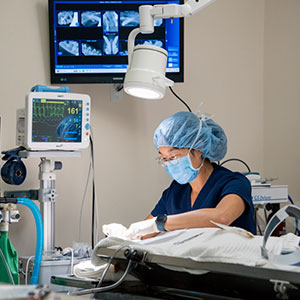
We send pre-surgical anti-anxiety, anti-nausea, and antacid medications home with you to give that morning. We want your pet to feel calm and comfortable when they arrive for their procedure. After check-in, where we go over the plan together and answer any of your questions, we place an IV catheter, start IV fluids, and give additional medications to prevent pain and keep them relaxed. We always have advanced monitoring equipment running, too: pulse oximetry, blood pressure, capnography, and temperature tracking give us real-time observations of your pet’s vital signs and early warnings so we can make adjustments to their anesthesia.
Recovery happens in a surgical recovery suite directly visible to our treatment area, so our team can see your pet at all times. Your pet wakes up on a soft pad, on blankets sprayed with calming pheromones, and soft music playing in the room. We call you after the dental X-rays to share what we found, and again once your pet is awake and stable.

If anything looks off during the procedure, we stop. We wake your pet up. We talk to you. The answer to “is this really safe?” is that we can minimize risk by performing the right tests before anesthesia, and by paying attention every minute your pet is under.

Cat Dental Cleanings in Covina, CA

Cat dentals follow the same core protocol as our canine cleanings: pre-anesthetic bloodwork, IV catheter and fluids, veterinarian-monitored anesthesia, full-mouth digital X-rays, scaling, polishing, and fluoride. However, cats need their own kind of attention, because they often hide oral pain better than dogs. The signs are subtle: grooming less, eating slower, dropping food, losing weight, or escalating to refusing meals entirely.

The most common dental disease in adult cats is feline tooth resorption, where parts of a tooth dissolve below the gumline. It affects more than half of cats over the age of five. Resorptive lesions are painful, and they’re not visible on an exam alone: the tooth often looks normal from the outside while the root is breaking down underneath. Full-mouth dental X-rays are the only way to catch them, which is why X-rays are part of every Covina cat dental.

Our anesthesia and handling are tailored to cats, too. They get cat-appropriate doses, active warming during the procedure (because cats lose body heat faster under anesthesia), and wake up with the same low-stress recovery our dogs do: pheromone-sprayed blankets, soft blankets, & calming music.

Our feline dental cleaning bundle starts at $499.

Dog and Cat Dental Cleaning Cost in Covina, CA

Part of our commitment to you as a pet owner is no surprises. That’s why we publish our prices online — we think you deserve that transparency before you walk in the door.

There’s a lot that goes into a dental cleaning, and we hope this page helps explain why dentals at Covina cost what they do. Bundle pricing covers the full protocol we walked through above: IV catheter and fluids, anesthesia and veterinarian-led monitoring, full-mouth digital X-rays, charting and probing, scaling, polishing, fluoride treatment, post-op monitoring, and take-home instructions.

Procedure Bundle Price
Canine dental, under 39 lbs $599
Canine dental, 40 lbs and over $729
Feline dental $499

These are starting prices. If your pet needs extractions, additional radiographs, or referral to a board-certified veterinary dentist for a complex procedure, those are billed separately when needed, and we discuss them with you before adding them to the plan. To see other prices for veterinary services at Covina, make sure to look at our pricing page.

If cost is a concern, we accept Cherry, a third-party payment option that lets you split costs into monthly payments, along with our other payment options. If you have questions about making a payment, give us a call or see our Payment Options page.

How Often Does My Pet Need a Dental Cleaning, and What Can I Do at Home?

How often your pet needs a dental cleaning depends on the pet. Some dogs and cats need a professional cleaning every year. Others can stretch to every two or three years with consistent home care. Genetics, breed, diet, and individual variation all play a role.

That’s where home care comes in. The more you can do between professional cleanings, the slower plaque builds, and the longer your pet can go before they need the next dental.

Daily brushing is the single most effective thing you can do at home. Use a soft-bristled toothbrush and a pet enzymatic toothpaste (never human toothpaste, which can be toxic!). We hand out free toothbrush samples at appointments and sell the enzymatic toothpaste at the front desk. It comes in flavors pets enjoy, like chicken and seafood, to help make home dental care easier.

If daily brushing isn’t realistic for your pet (or for you!), the next-best option is a dental product approved by the Veterinary Oral Health Council. The VOHC seal means the product has been tested and shown to reduce plaque or tartar. Dental chews, treats, water additives, and prescription dental diets all have approved options. To keep teeth healthy, we recommend a simple rule for chews and toys: if you can’t indent it with a fingernail, it’s too hard. Bones, antlers, bully sticks, rawhides, and tennis balls can all crack or wear down teeth.

Some owners brush daily, and some choose chews and treats only. What matters is doing something consistently, and keeping your pet on an annual wellness exam schedule. We’ll examine the mouth at each annual visit and tell you when it’s time to consider a dental cleaning for your dog or cat.
Frequently Asked Questions

At Covina Animal Hospital in Covina, CA, anesthetic dental cleaning bundles start at $599 for dogs under 39 lbs, $729 for dogs 40 lbs and over, and $499 for cats. The bundle covers our comprehensive approach to ensure your pet’s safety: IV catheter and fluids, anesthesia and veterinarian-led monitoring, full-mouth digital X-rays, charting and probing, scaling, polishing, fluoride treatment, post-op monitoring, and take-home instructions. Extractions, additional radiographs, take-home medications, and injections to reduce pain are billed separately when needed—we discuss them with you before adding them to the plan.
Anesthetic dental cleanings carry some risk, like any procedure under anesthesia, but the risk is small for healthy patients and is minimized by careful pre-op screening and continuous monitoring during the procedure. At Covina Animal Hospital, every patient gets a physical exam and pre-anesthetic bloodwork before the procedure is scheduled. Pets over eight years of age or with concerning findings get chest X-rays. Our veterinarian performs the induction and intubation, and monitors the pet for the entire procedure, with continuous tracking of pulse oximetry, blood pressure, capnography, and temperature.

Most dogs and cats need a professional dental cleaning every one to three years, depending on genetics, breed, diet, and home care. Some pets need annual cleanings; others can go longer with consistent brushing or VOHC-approved dental products. The best way to know what’s right for your pet is the annual wellness exam at Covina Animal Hospital, where we examine the mouth, look for early signs of disease, and recommend a cleaning when we think it’s in the best interest of your pet’s health.

Anesthesia-free dental cleanings (sometimes called “AFD”) aren’t equivalent care to a full anesthetic dental, even though they’re marketed as a safer alternative. The parts of a cleaning that matter (probing under the gumline, scaling below the gumline, and full-mouth X-rays) can’t be done on an awake pet. The teeth may look cleaner afterward, but the procedure misses what matters most. AFD also tends to be more stressful for the pet, who’s held still while their teeth are scraped without sedation. At Covina Animal Hospital, we don’t offer or recommend it. Our position is aligned with the AVMA and the American Veterinary Dental College, which has published educational materials we share with anyone considering AFD: What is AFD?, Risks of AFD, and Reasons not to choose AFD.
Covina Animal Hospital performs general extractions in-house, including full-mouth extractions, and some simple oral tumor removals. While pets who receive regular dental cleanings at Covina are much less likely to need a referral for expensive specialty care, we refer out to a board-certified veterinary dentist for procedures that need specialty equipment or training. These include things like root canals, pulp therapy, sealants, crowns, orthodontics, and complicated jaw fractures. During every dental, we probe for gingivitis, pocketing, mobility, fractures, and caries, and take full-mouth dental X-rays to see each tooth from crown to root. For tough cases or unstable patients, we may stage the procedure across multiple visits.
Dental cleanings can be safe for senior pets when paired with thorough pre-op screening and tailored anesthesia protocols, and senior pets are often the ones who need a cleaning the most. For senior dental candidates at Covina Animal Hospital, we rely more on lab work and imaging, and we weigh the value of treating the pain and infection in the mouth against the anesthesia risk for that specific pet. Cardiology referrals are also more common for older pets. Before the procedure, we walk through how you want us to handle any unexpected emergency situations so we can move quickly if something does happen. If anything looks concerning once we’re underway, we stop and wake your pet up. While we can minimize risk through pre-operative screening, we can’t fully eliminate it. Most senior pet owners hear that and prefer it to a guarantee no one can actually make.

FAQ Questions and Answers

At Covina Animal Hospital in Covina, CA, anesthetic dental cleaning bundles start at $599 for dogs under 39 lbs, $729 for dogs 40 lbs and over, and $499 for cats. The bundle covers our comprehensive approach to ensure your pet’s safety: IV catheter and fluids, anesthesia and veterinarian-led monitoring, full-mouth digital X-rays, charting and probing, scaling, polishing, fluoride treatment, post-op monitoring, and take-home instructions. Extractions, additional radiographs, take-home medications, and injections to reduce pain are billed separately when needed—we discuss them with you before adding them to the plan.
Anesthetic dental cleanings carry some risk, like any procedure under anesthesia, but the risk is small for healthy patients and is minimized by careful pre-op screening and continuous monitoring during the procedure. At Covina Animal Hospital, every patient gets a physical exam and pre-anesthetic bloodwork before the procedure is scheduled. Pets over eight years of age or with concerning findings get chest X-rays. Our veterinarian performs the induction and intubation, and monitors the pet for the entire procedure, with continuous tracking of pulse oximetry, blood pressure, capnography, and temperature.

Most dogs and cats need a professional dental cleaning every one to three years, depending on genetics, breed, diet, and home care. Some pets need annual cleanings; others can go longer with consistent brushing or VOHC-approved dental products. The best way to know what’s right for your pet is the annual wellness exam at Covina Animal Hospital, where we examine the mouth, look for early signs of disease, and recommend a cleaning when we think it’s in the best interest of your pet’s health.

Anesthesia-free dental cleanings (sometimes called “AFD”) aren’t equivalent care to a full anesthetic dental, even though they’re marketed as a safer alternative. The parts of a cleaning that matter (probing under the gumline, scaling below the gumline, and full-mouth X-rays) can’t be done on an awake pet. The teeth may look cleaner afterward, but the procedure misses what matters most. AFD also tends to be more stressful for the pet, who’s held still while their teeth are scraped without sedation. At Covina Animal Hospital, we don’t offer or recommend it. Our position is aligned with the AVMA and the American Veterinary Dental College, which has published educational materials we share with anyone considering AFD: What is AFD?, Risks of AFD, and Reasons not to choose AFD.
Covina Animal Hospital performs general extractions in-house, including full-mouth extractions, and some simple oral tumor removals. While pets who receive regular dental cleanings at Covina are much less likely to need a referral for expensive specialty care, we refer out to a board-certified veterinary dentist for procedures that need specialty equipment or training. These include things like root canals, pulp therapy, sealants, crowns, orthodontics, and complicated jaw fractures. During every dental, we probe for gingivitis, pocketing, mobility, fractures, and caries, and take full-mouth dental X-rays to see each tooth from crown to root. For tough cases or unstable patients, we may stage the procedure across multiple visits.
Dental cleanings can be safe for senior pets when paired with thorough pre-op screening and tailored anesthesia protocols, and senior pets are often the ones who need a cleaning the most. For senior dental candidates at Covina Animal Hospital, we rely more on lab work and imaging, and we weigh the value of treating the pain and infection in the mouth against the anesthesia risk for that specific pet. Cardiology referrals are also more common for older pets. Before the procedure, we walk through how you want us to handle any unexpected emergency situations so we can move quickly if something does happen. If anything looks concerning once we’re underway, we stop and wake your pet up. While we can minimize risk through pre-operative screening, we can’t fully eliminate it. Most senior pet owners hear that and prefer it to a guarantee no one can actually make.

Schedule a Dental Consultation Schedule Your Pet's Dental Cleaning in Covina If you've been worrying about anesthesia, or putting off a dental because you're not sure where to start, we can help. Schedule a consultation and we'll walk through your pet's options together. We see pet owners from Covina and the surrounding east San Gabriel Valley, including West Covina, Baldwin Park, Glendora, Azusa, San Dimas, and La Verne. Call Us