







Cat and Dog Allergies Most common underlying causes of itching and allergies in small animals Request Appointment

Longer, Happier Lives Coping with an itchy pet can be an extremely frustrating experience for a pet owner and can truly test the limits of the human-animal bond. Persistent scratching and chewing by a dog can also result in open wounds to the skin and pain to your pet. The following information is intended to help provide pet owners with a basic understanding of the most common underlying causes of itching and allergies in small animals. Here’s a summary of the most common underlying causes of itching and allergies in small animals.

What are the most common symptoms of allergies in pets?

There are many reasons for pets to itch: parasites, allergy to flea bites, food allergy, secondary infection and the list goes on.

The following are findings in the history and examination of the patient that might lead to a diagnosis of atopy. In fact, meeting five criteria from this list yields an 85 percent accuracy for the diagnosis of atopic dermatitis, at least for dogs:

Seasonal itchiness due to atopy tends to begin early in a pet’s life (between ages 1 and 3 years in 70 percent of dogs diagnosed with atopy). Food allergy tends to begin later (average age 5 or 6 years in dogs) or earlier (less than 6 months of age). Age at which itching first manifests is not as reliable a sign in cats as in dogs.
It is indoors where many airborne allergens are concentrated; however, it is important to note that allergens in the air are in the air for miles so it is not easy to escape allergens by simply going outdoors nor by simply going indoors.
Whether the patient is a dog or cat, itchiness due to atopy responds rapidly to cortisone-type medications (prednisone, betamethasone, dexamethasone, etc.) as does itching due to insect bite allergy. Food allergy is more variable in its response; it may or may not respond well.
Yeast (Malassezia pachydermatis) live on the surface of the skin normally but with all the changes allergy causes to the skin’s microenvironment, yeast will proliferate and create a stinky, thickened, pigmented skin that resembles elephant skin or even tree bark. Environmental allergy is a strong predisposing factor in developing yeast dermatitis.
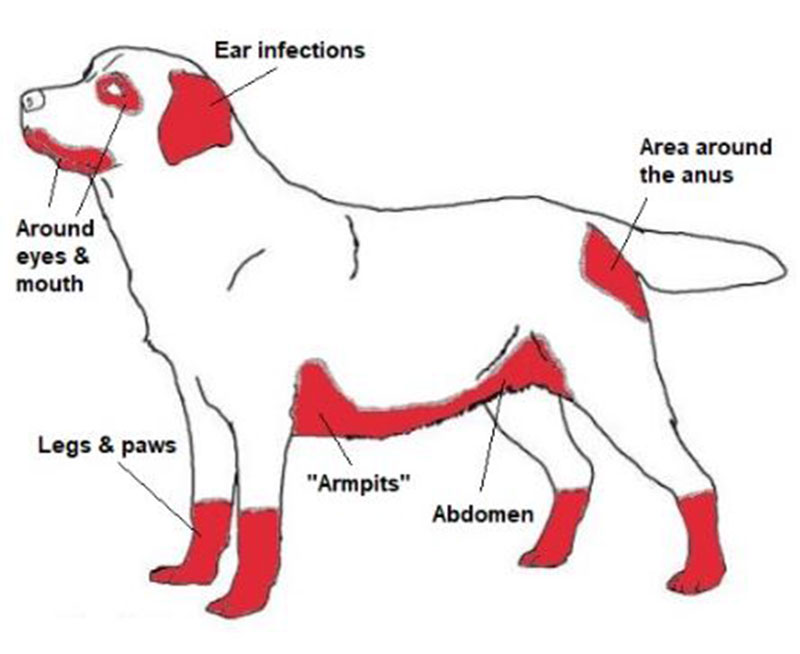
Whether it is chewing the top of the feet or between the toes, foot licking is a classic feature of atopic dermatitis.
The non-haired (inside) portion of the ear flap (the concave pinna) is commonly involved in atopic dermatitis regardless of whether the inflammation extends down the ear canal and leads to what we usually think of as an ear infection. The concave pinnae become greasy, red, thickened, smelly or any combination of the above.
Ear margin involvement is suggestive of sarcoptic mange and would lead one away from airborne allergies.
The lower back is the flea bite zone. There are few conditions other than flea bite allergy that cause itching in this area, so if this area is involved, make sure flea control is achieved before further evaluating the skin.
Seasonality of the itching is also a clue towards an airborne-related allergy, but since there are many climates where seasons are ambiguous, this is not necessarily a hard and fast feature of atopic dermatitis. It should also be noted that while skin testing and blood testing are used to make immunotherapy to treat atopic dermatitis, reactions and positive results on these tests do not contribute to making a diagnosis of atopic dermatitis. Many normal animals will have positive results. These tests are for animals where the diagnosis of atopic dermatitis has already been made based on the above criteria as well as ruling out other itchy diseases.

What are the most common causes of chronic itching?

Itching in dogs can involve not only scratching but also chewing, licking, and rubbing. The two most common causes of itching are external parasites and allergies. Examples of itchy external parasites on dogs are fleas and small bugs called sarcoptic mange mites.
What are the major types of allergies in dogs?

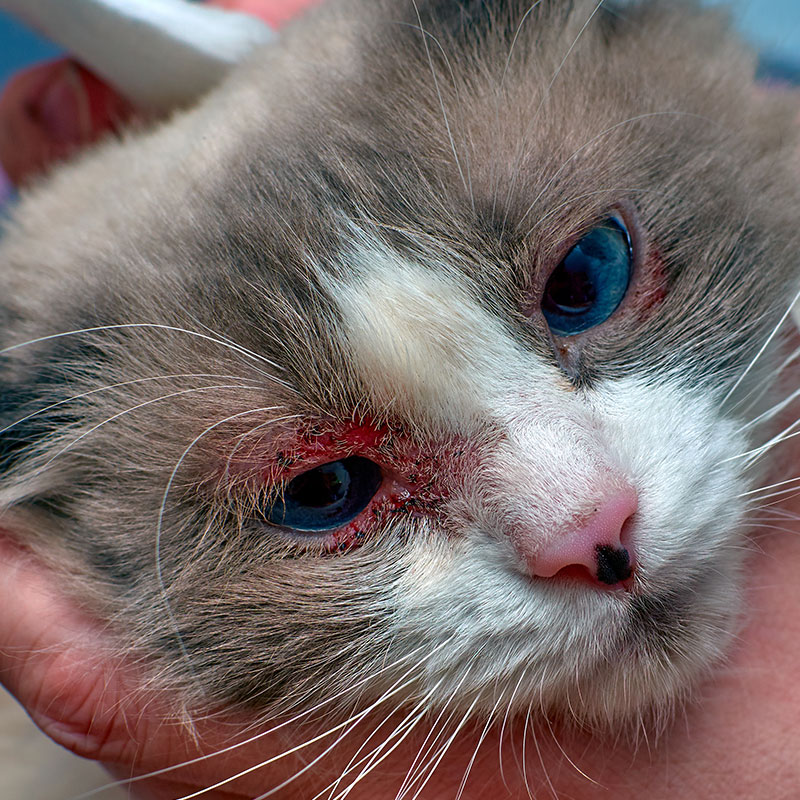
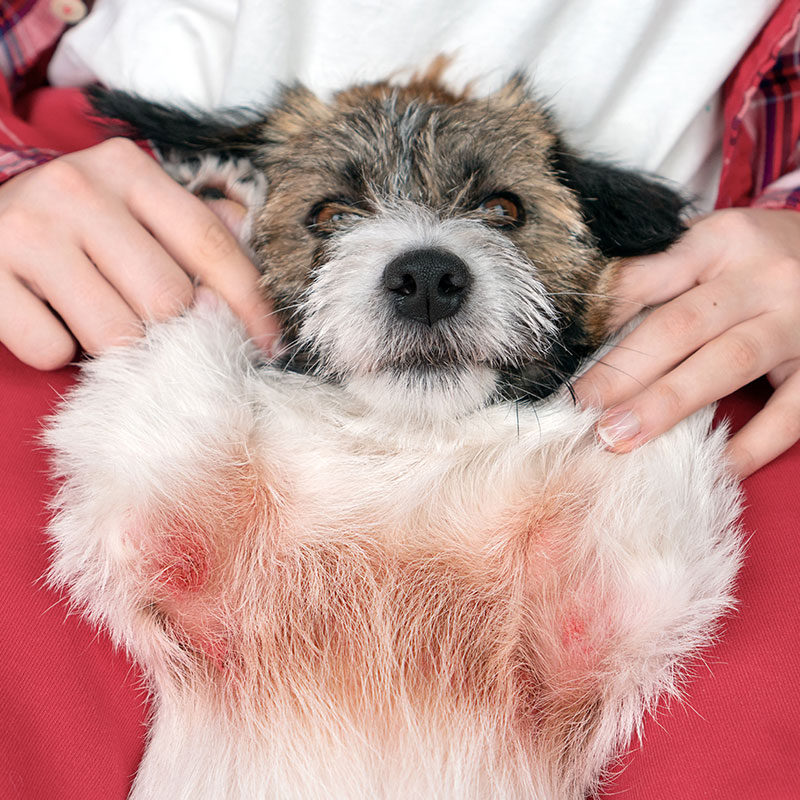
Allergies are a common cause of skin and ear conditions in dogs. People with allergies usually have “hay fever” (watery eyes, runny nose and sneezing) or asthma. However, dogs with allergies rarely have respiratory signs from their allergies and instead usually have red and itchy skin, hair loss, or recurring skin or ear infections.

Flea allergic dermatitis is the most common skin disease in dogs. For the flea allergic patient, 100% flea control is essential for remaining symptom-free.

“But doctor, I never see fleas on my pet.” You may not see them, but that doesn’t mean they aren’t there! Flea allergy is caused by the flea’s saliva, and it only takes a few bites to cause a problem. Fleas spend most of their time off of the animal. After they bite the pet, they jump off and live in the surrounding environment.

“If fleas are the problem, why is my pet still itchy in the winter?” In warm climates or in our homes, fleas may survive in low numbers year-round. Because flea allergy is so common, many veterinarians recommend instituting complete flea control before proceeding with tests for itching. For most allergic dogs, year-round flea treatment is an important part of reducing itch.

Some pets develop hypersensitivities to foods. Various food proteins, carbohydrates, or even preservatives or dyes can all be potential food allergens. There is currently no accurate blood or skin test to determine if your dog has a food allergy. Pet’s allergies can change or worsen over time, so it’s possible for them to develop an allergy to food they have been eating their entire life. The only method of diagnosing a food allergy is by placing your dog on a carefully selected prescription or homemade hypoallergenic diet for several weeks, which is called a food trial. This diet would only contain ingredients your dog has never eaten before. If the allergy signs resolve, a food challenge is performed by feeding the former diet and watching for a return of the itching. If this occurs, a diagnosis of food allergy is confirmed.
Atopic dermatitis is a type of allergy. Skin or ear inflammation occurs in response to a variety of normally harmless substances, such as plant pollens, house dust mites, and other environmental allergens. Allergy tests of the skin or blood help us compile a list of allergens for a “vaccine” (allergen specific immunotherapy) to decrease the pet’s sensitivity.

Treatment Options Can allergies be cured? Unfortunately, there is no cure for allergy and it is usually a life-long problem. We seek to control allergies and improve the quality of life for both you and your dog. We will formulate the best program of management that suitsball involved with your dog’s care.
Many patients will not be particularly itchy in between infection flare-ups so it is especially important that these be controlled. Treating flare-ups may be the only therapy needed but there will be other patients who require therapy throughout their allergy season.

Primary treatment options available for the management of itching and skin inflammation are as follows:

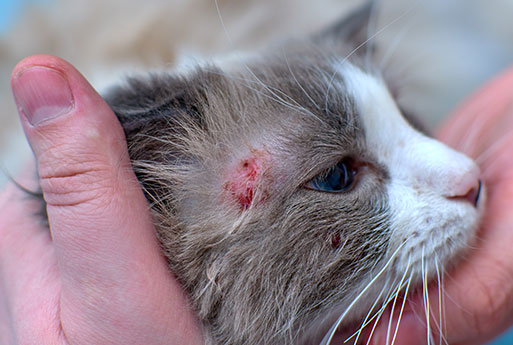
Allergies are additive. This means that when a patient has multiple allergies, each allergy alone may not be enough to cause itching but the allergies all active together probably will. Consequently, taking away one of the active allergies may be enough to reduce allergy symptoms to resolve the itching. Flea bite allergy is extremely common. We now have so many effective products available that there is no reason for an animal to contend with a flea bite allergy. This simple bit of therapy (flea control) may be enough to bring the pet below its itch threshold without having to contend with any of the therapies listed above.

Covetrus Online Pharmacy – Nexgard Link

Before doing anything else, it is important to clear up secondary infections. Secondary infections involve bacteria (usually Staphylococcal) and/or yeast (Malassezia) at the site of the itchiest areas on the body. These organisms live naturally in the skin but when the skin is irritated, they gain access to inner tissue layers and proliferate. Sometimes they actually come to generate further allergic responses in the skin. These infections tend to recur and are the usual cause of recurrence of itch symptoms in a patient who was previously controlled.
Apoquel (oclacitinib) is an oral tablet best used for itch relief and blocking itch symptoms. It is popular as it works fast. It does not address the inflammation in the skin; it just stops the itch sensation. This means that any skin infection causing the itch will still need to be treated. For more details visit: apoqueldogs.com.

Atopica (cyclosporine) is a modulator of the immune response that has been helpful in both human and non-human organ transplant patients. It has been found to be reliably effective in atopic dermatitis and does not carry the unpleasant side effect profile that steroids do. That said, it is not without side effects of its own. It is used mostly in dogs but can also be used in cats. It is for long-term management but is not helpful for acute flare up control.

Cytopoint is an injection that uses vaccine technology to eliminate one of the main mediators of itch sensation. The injections provide relief from itching for 4-6 weeks in 80 percent of dogs and show effectiveness usually within 24-48 hours of the injection. For many dogs, relief of itch stops the vicious cycle of itch/infection. Again, any infections still need treatment but the sensation of itch is usually controlled. For more details, visit cytopoint4dogs.com.
Bathing your pet weekly to remove allergens from the hair may be helpful in reducing allergen exposure plus tepid water is soothing to itchy skin. There are also many therapeutic moisturizing shampoos that can be used to restore the skin’s natural barrier or to assist in general itch relief. Our shampoos of choice are Douxo Chlorhexidine or Douxo Calm. It is also beneficial to apply moisturizing mousse to the skin in between bath days, such as Douxo S3 Pyo Mousse.

Covetrus Online Pharmacy Douxo Link

Ears are especially prone to overgrowth of yeast and bacteria, therefore ear infections are a common secondary issue caused by allergies. Initial cleaning and topical treatment should be administered to clear the infection. Once the infection has been resolved, an ear cleaning solution may be prescribed for weekly use and for after swimming or bathing to prevent future infections. Many pets will get their ears plucked during grooming appointments, however, this can cause ear infections. It is not recommended to pluck ear hair unless medically necessary.

These cortisone-type medications (prednisone, prednisolone, triamcinolone, dexamethasone, etc.) tend to be useful as the first line of defense against itchy skin. A higher dose is used at first but this is quickly tapered down once the condition is controlled. Prednisone, for example, is given every other day so as to allow the pet one day of recovery from the prednisone’s hormonal actions. An atopic pet will usually respond within days.

Side effects include:

  • Excess thirst
  • Excess hunger
  • Panting
  • Excess urination, which could lead to house-breaking issues
  • Suppression of the immune-system/bringing out latent infection, especially urinary tract infection and upper respiratory infection.
  • Raising blood sugar/destabilizing a borderline diabetic (especially a problem for cats if long-acting injectable steroids are used).

Steroid hormones are useful for acute flare-ups as well as for long-term management of atopic dermatitis (assuming limits are placed on how long they are used). In the short term, side effects can be controlled by adjusting dosage but in the long term, these medications are more problematic and if possible, their use should be minimized. Side effects are greatly minimized when steroids are used topically instead of orally.

These products are not analogous to adding dietary oil to the pet’s food, such as olive oil, coconut oil, corn oil etc. Instead, these special fatty acids act as medications, disrupting the production of inflammatory chemicals within the skin. By using these supplements, it may be possible to postpone the need for steroids/cortisones or reduce the dose of steroids needed to control symptoms. It takes a good 6 weeks to build up enough omega 3 fatty acids in the body to see a difference.

Covetrus Online Pharmacy Omega Supplements Link

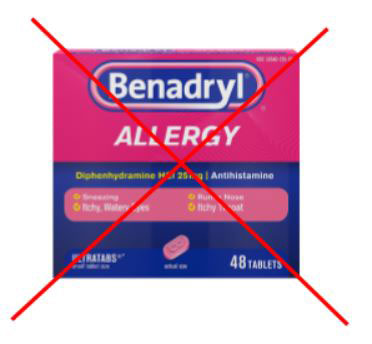
Antihistamines have been popular for many years for pets, however, they often do not provide enough short-term relief or reliable long-term relief. They may be helpful in combination with other products in that their use may reduce the need for other products.
Hyposensitization, more commonly known as allergy shots, is by far the treatment of choice for atopic dermatitis. All the other medications are basically just itch relief; only hyposensitization actually changes the immune system. Some dogs are eventually able to go off all treatment and are no longer allergic after they have been on hyposensitization long enough. Most dogs experience at least enough improvement to require fewer additional treatments but there are some caveats before making an appointment for allergy testing.

  • Allergy shots require approximately 6 to 12 months to begin working.
  • 25% of atopic dogs will not respond (these are usually the animals allergic to multiple allergens).
  • 25% will require prednisone or similar steroid at least at some times.
  • You will most likely have to give the allergy shots yourself.
  • Referral to a veterinary dermatologist may be necessary.

In hyposensitization the patient is injected with small amounts of allergens on a regular basis. As time passes, the amounts of allergens increase and injections are given at longer intervals. The selection of allergens is made based on the results of either an intradermal skin test, a blood test, or a combination of the results of both tests. The younger the pet is when this treatment starts, the better it works.

Itchy skin has been the scourge of dogs and cats for decades, if not centuries. We are now armed with a great understanding of immunology and have many tools to address allergy symptoms. Your veterinarian can guide you further with regard to a proper regimen or you may wish to consider seeing a veterinary dermatologist for more specialized guidance. If your veterinarian decides treatment is not working as well as hoped for, discuss whether or not a referral to a veterinary dermatologist is in your pet’s best interest.