



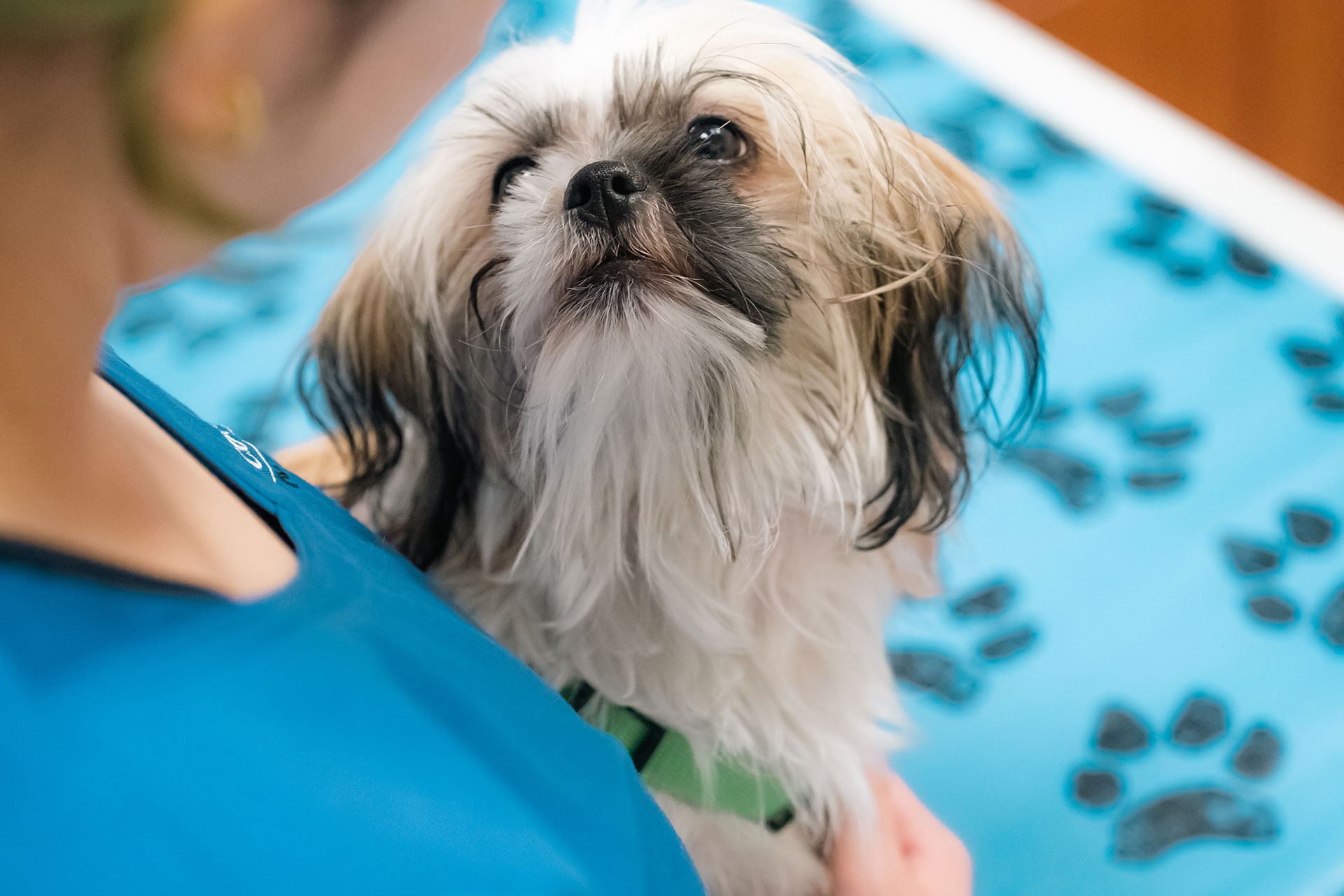


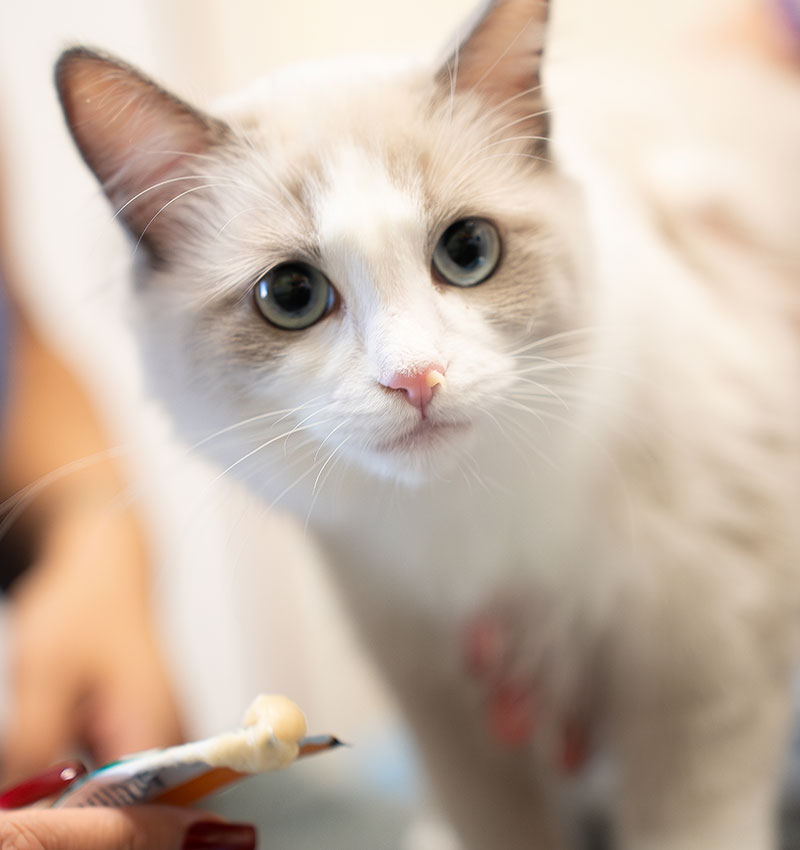
Treat bonanza. Bring 50 to 100 of your pet's favorite treats but in tiny amounts. Cut them up if necessary. Your pet likes a variety of treats? Bring an assortment! Even your cat's canned food might do the trick. Treats should be no larger than half a pea or a single lick. You might not use all of them, but it is better to have too many than not enough.


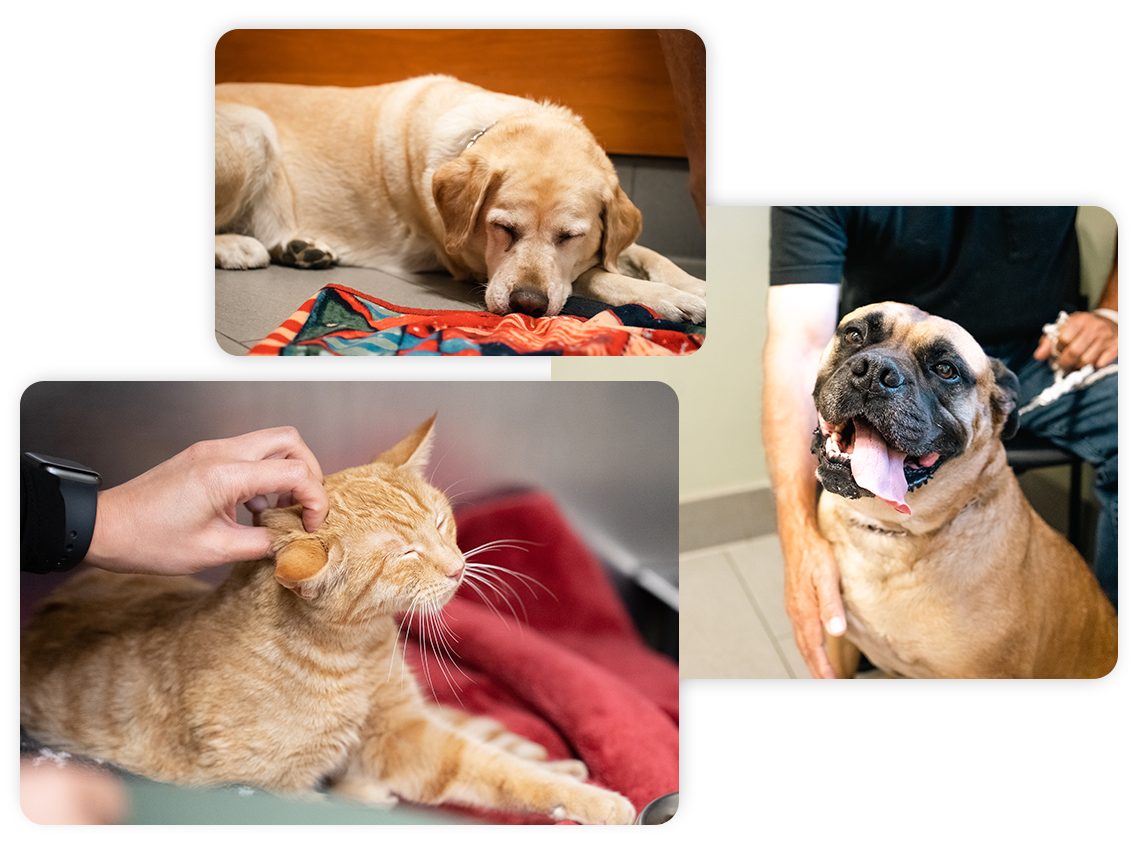
Favorite toys and a grooming brush. Bring some familiar items your pet likes. This will help your pet relax in the veterinary hospital. The veterinary team may ask you to use these items to help distract your pet during the visit.
Towel, shirt, blanket, or bed sprayed with species-specific calming pheromones or lavender. Commercially available calming pheromones can help promote relaxation. The scent of lavender has been shown to have a calming effect on dogs during car travel. An item that smells like home, such as a blanket your pet sleeps on or a T-shirt you’ve worn, can also provide comfort for your pet. For dogs, consider spraying a bandana with a calming pheromone and placing it on your dog’s neck. When you use pheromone sprays, allow the pheromone to dry for 10 to 15 minutes before exposing your pet to the sprayed item.
Medication
If your veterinarian has ordered any anti-nausea or anti-anxiety supplements or medications, make sure to use them as ordered. Talk to your veterinarian if you think anti-nausea or anti-anxiety supplements or medications would help your pet have a more pleasant veterinary experience.


Make sure your pet is comfortable with confinement for travel. Carriers for cats and small dogs or crates or seatbelt harnesses for medium-size to large dogs are safe options for travel. Use yummy treats to condition your dog to comfortably use harnesses.
Keep the carrier/crate out in a commonly used area of the house at all times and incorporate some of these techniques to create a carrier/crate oasis:
- Put your pet’s favorite toy or bedding near or in the carrier/crate
- Play with your pet near or at the carrier/crate
- Place a pheromone-infused towel beside the object of attention
- Place treats within your pet’s line of vision or even place them within the carrier/crate
- Create a game with your pet (for instance, play find the treats, or a rubber food puzzle toy with canned food inside the carrier)
- Feed your pet in or near the carrier/crate. Let your pet enter on his/her own. You can teach your pet to enter the carrier/crate on cue (a treat food reinforcement, or toss a treat into the carrier/crate).
Need help? Ask your veterinarian who he or she recommends for Fear Free training.


